Golden Pacific Powerlink
California is projected to use more electricity than ever as homes, transportation, businesses, and industry increasingly rely on electricity.
To ensure our region has enough to support the growing demand for electricity, the State’s transmission planning process has determined that the region needs increased transmission capacity and resiliency to move electricity where the need is greatest.

Meet the Golden Pacific Powerlink Project.
Golden Pacific Powerlink is a project being developed by San Diego Gas & Electric® (SDG&E®) and is a proposed 500-kilovolt electric transmission line designed to strengthen California’s regional power network and maintain future reliability as the state meets it energy policy goals. The need for the policy-driven project was identified by the California Independent System Operator (CAISO), the state’s independent transmission planning authority, as critical new infrastructure needed to reduce congestion, meet the state’s energy goals, and enhance the flow of electricity on the statewide grid.
Why is the Project Needed?
California is entering a period of unprecedented growth in electricity demand as more aspects of daily life depend on electricity. According to CAISO’s 2022–23 Transmission Plan, key transmission lines serving Southern California can become constrained, which limits how much power can be delivered into the region during periods of high demand.
The statewide transmission planning process has identified the need for significant new electricity generation and delivery capacity to meet future demand and reliability needs. Without new transmission pathways, electricity – regardless of where it is generated – cannot be delivered to major population centers where the demand will be highest.
Transmission constraints can lead to congestion on the grid, higher costs, and reduced reliability during extreme weather or emergency conditions.
Golden Pacific Powerlink is a proposed project designed to add capacity, reduce congestion, and create more flexible routes for electricity to flow, helping support a more resilient and dependable grid now and in the future.
Benefits
Project Map
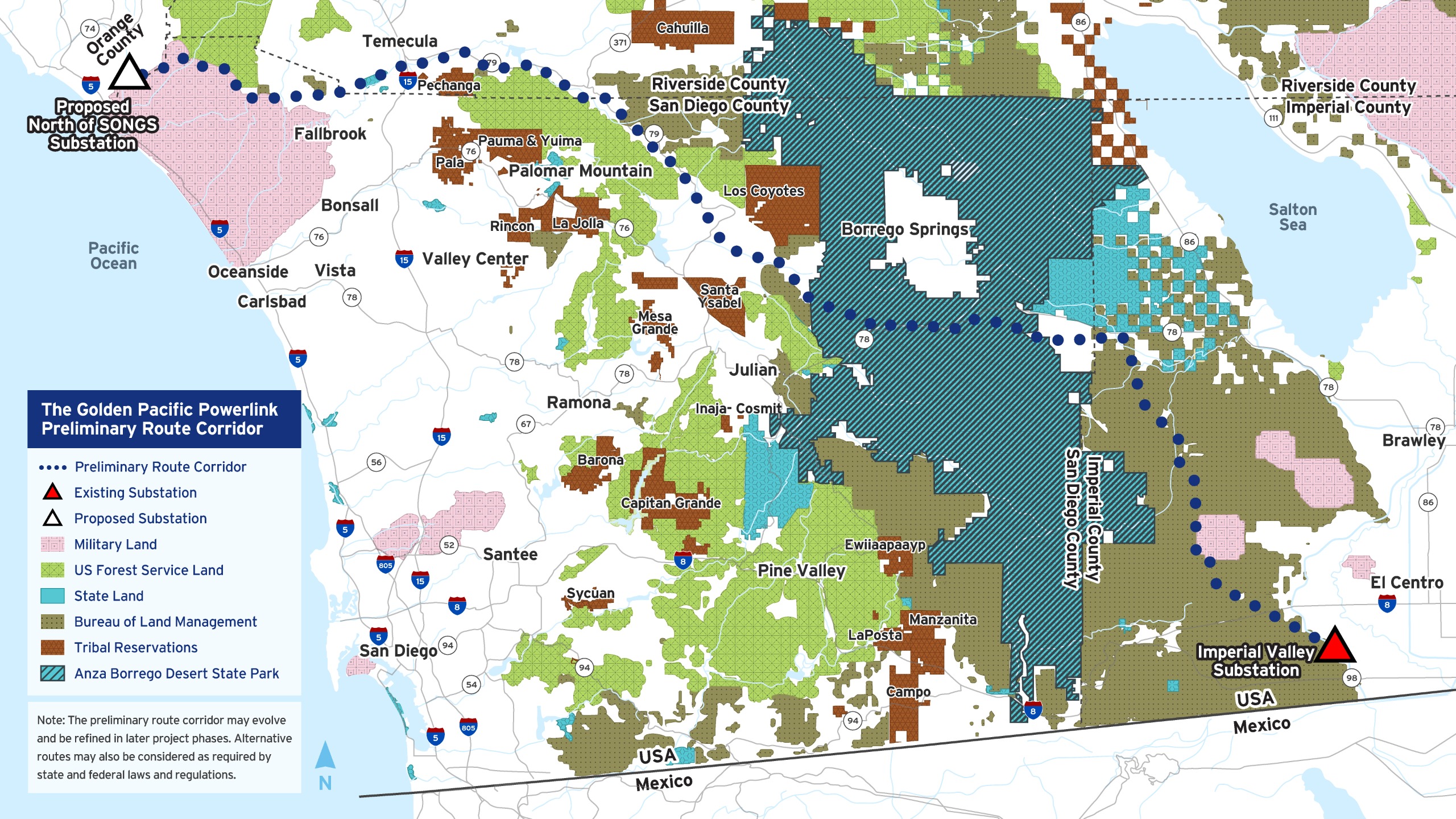
Map showing the preliminary proposed route between SDG&E’s Imperial Valley Substation and a new substation to be built in southern Orange County. The exact route is subject to change and will be evaluated through environmental review and permitting processes.